Published on March 18, 2026
Written by Ashley Laderer
Is social media anxiety taking over your life? Read this to learn why social media is so anxiety-inducing, and what to do about it.

Clinically Reviewed by Courtney Way, MA, LCAT
After spending a long time scrolling on social media, do you find yourself feeling worse than when you started? Maybe you feel like you can’t stop doomscrolling even if you want to, more insecure, or drained.
Social media has opened our world to positive connections people never thought possible — but it can also undoubtedly be bad for your mental health, especially if you use it excessively. For example, social media anxiety has become increasingly common. Read on to learn more about social media anxiety, what causes it, how to manage it, and more.
Social media can worsen anxiety
Seek evidence-based support for stress, anxiety, and other mental health concerns that arise from social media usage.
Understanding social media anxiety
Social media anxiety is a common phenomenon, especially among young adults and adolescents who spend excessive amounts of time on social media. This is a form of stress and anxiety caused by the nature of social media platforms like Instagram and TikTok, for example.
“Social media anxiety feeds itself. Folks may not even want to check their feeds or scroll and may understand the negative effects of doing so, but may feel they have to do so,” says Beth Couture, MSS, LSW, an experiential therapist at Charlie Health. “Constant checking may reduce anxiety in the moment, but it usually creates more anxiety in the long term.”
On top of increased general anxiety, Couture says “symptoms” of social media anxiety include:
- Feelings of low self-esteem and inadequacy
- Pulling away from in-person social interactions
- Constantly checking social media, even when you don’t really want to
- FOMO (fear of missing out)
- Distress when you’re not able to access social media
- Feeling like you need to post a lot to get “likes” for validation
- Trouble sleeping
Why does social media cause anxiety?
There are several reasons social media can contribute to anxiety. These include:
They’re designed to keep you online and crave stimulation
Social media apps are intentionally designed to keep you engaged for as long as possible, for the sake of their business model. They do this with “infinite scroll” features (your feed will never run out of content), personalized algorithms that show you content in line with your interests, and intermittent rewards (likes).
All of this releases dopamine (a feel-good chemical your brain releases, related to your brain’s reward system) — but this isn’t necessarily a good thing. Ultimately, this makes your dopamine system overactive, training your brain to crave constant stimulation — making silence, boredom, or offline time feel uncomfortable and anxiety-inducing.
The comparison trap
Social media is a highlight reel, but many people either don’t realize this or forget it.
“Social media presents curated views of people rather than authentic ones, but they are often presented as authentic and real,” says Couture. “This can contribute to anxiety, as viewers might wonder, ‘What is wrong with me that my life doesn’t look like this?’”
Constant social comparison to others’ lives online can make you feel bad about yourself and lead to low self-esteem or worsen already low self-esteem.
Feeling like you always need to be “on”
“Social media platforms also create the impression that we must engage with others constantly to remain aware of the world and cultural events,” says Couture. “This creates a fear that taking even a short break from social media means missing something important.”
The impact of notifications
“Constantly receiving notifications and alerts from social media can put people on high alert, causing restlessness, loss of focus, and anxiety,” Couture says.
This is why you might even feel like your phone vibrated when it didn’t — a phenomenon so common that it even has a name: phantom vibration syndrome (PVS).
Increased need for external validation
Self-validation and self-acceptance are ideal, but social media can make them harder to achieve, leading you to base your self-worth on social media performance rather than your internal views.
“Relying on likes, comments, and other social media engagement can create a need for external validation,” Couture says. “When folks do not get that validation or receive less of it than they want or expect, this can lead to experiencing anxiety.”
Disrupted sleep
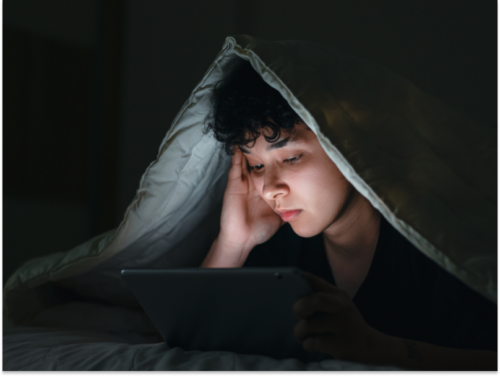
Excessive social media usage, especially around bedtime, can negatively affect sleep quality, Couture says.
In addition to the increased anxiety from social media that may cause trouble sleeping, the effects are physiological, too.
Your phone gives off blue light, which can impact sleep. Research shows that blue light around bedtime reduces the amount of deep sleep you get, impacting overall sleep quality. Plus, the blue light suppresses melatonin, a hormone that helps you fall asleep.
If you aren’t getting good quality sleep, it can affect your mental health by causing irritability, worsening anxiety symptoms, and making it harder to regulate emotions the next day.
Other mental health impacts of social media
The mental health impacts of social media are well-known, with both the American Psychological Association and the U.S. Surgeon General issuing advisories on the risks, especially in young people.
Social media doesn’t just contribute to anxiety, but also other mental health challenges, too. Here’s what the research shows:
- Social media can increase eating disorder-related behaviors since it may show pro-eating disorder content, even if people aren’t actively seeking it out.
- Frequent social media use and using multiple social media platforms are linked to an increased risk of depression.
- People who prioritize online connections over in-person connections may develop social anxiety or experience worsened social anxiety disorder if they already have it.
- Increased social media use is linked to lower self-esteem in adolescents.
Social media addiction and anxiety
Sometimes, social media use can cross beyond unhealthy use into behavioral addiction territory.
A behavioral addiction (AKA a process addiction) is when you compulsively engage in a behavior and feel like you can’t control or cut back on the behavior, even when it’s causing negative consequences in your life.
So, people with a social media addiction feel unable to control their social media usage, despite negative impacts in aspects of life such as school, work, or in-person relationships, says Couture.
“People addicted to social media are often preoccupied with it and may constantly think about when they will next engage with it,” she says. “They may also experience withdrawal symptoms like irritability, restlessness, and anxiety when they try to stop using social media.”

8 min read
Every Adult Should Know How Social Media Impacts Youth Mental Health
Tips for managing social media anxiety
If social media leaves you feeling drained, on edge, or less-than, there are practical steps you can take to regain control and improve your mental health.
Here are eight tips to manage social media anxiety.
1. Prioritize IRL connections
Building and maintaining your real-world connections is key, Couture says. Increase the time you devote to social interaction in real life and seek out social situations that make you feel good, whether that’s attending community events, spending time with your best friends, or meeting new people through shared hobbies.
2. Find fulfilment outside of social media
“Try to reduce your screen time and increase your time out in the world,” Couture says. “Try gardening, walking, attending events, socializing, exercising — whatever interests you and helps you feel good.”
When you’re more engaged in the real world, you might find you’re less inclined to spend time on social media.
3. Curate the social media you do consume
If any specific accounts make you feel bad about yourself, cause excess anxiety, or give you FOMO, Couture suggests muting, unfollowing, or blocking them.
“Replace it with uplifting, educational, and inspirational content instead,” she recommends.
4. Use social media mindfully
Oftentimes, we just open social media again and again as a reflex when we grab our phone. However, it can help to catch yourself and take a beat first.
“Before opening an app or engaging with a platform, ask yourself why you’re doing so,” Couture says. “Do you need an escape? Mental stimulation? Are you feeling an emotion that needs to be expressed or processed? What else might you do to help yourself feel more grounded and fulfilled in the moment?”
From there, you can take a different action, like talking to someone, journaling, or meditating, she adds.
5. Turn off notifications
Something as simple as changing your settings to turn off notifications for social media platforms can make a difference. “You don’t need social apps constantly buzzing and distracting you,” Couture says. “Turning off notifications can reduce the time you spend compulsively checking them.”
6. Designate social media-free times
Decide on specific times throughout the day where you can commit to not using your social media apps. Couture says these can include meal times, when you first wake up, when you’re winding down for bed, or when you’re spending time with loved ones.
“Setting and maintaining boundaries for social media use can create more space in your life for other things and loosen social media’s grip on you,” she says. “Stick to these times by putting your phone away or locking social media apps,” she recommends.
7. Have a social media detox
Set aside a certain amount of time to detox from social media. This could be anywhere from a day to a weekend to a couple of weeks. “[The detox will] remind you that you don’t need social media to be happy, healthy, and fulfilled,” Couture says.
Research backs up the efficacy of social media detoxes. One study found that a two-week detox led to benefits like less social media addiction, improved life satisfaction, and reduced stress. Another study found that even a one-week detox was enough to reduce symptoms of depression, anxiety, and insomnia.
8. Seek therapy
Social media doesn’t have to rule your life. If anxiety from social media use is greatly impacting your mental health, seeking professional help can help.
Additionally, if you’ve repeatedly tried and failed to reduce time spent on social media or feel like you can’t control your usage, it’s a good idea to see a therapist, Couture says. She notes other signs you could benefit from therapy include:
- Loneliness
- Depression
- Low self-esteem
- Disruption in appetite, sleep, or daily routines
- Loss of interest in hobbies or other activities that used to bring you joy
A therapist can help you learn coping skills to manage anxiety and practical tools to cut back on social media use or manage social media addiction, if applicable. Therapy modalities like cognitive behavioral therapy (CBT) and dialectical behavior therapy (DBT) can help you manage negative, unhelpful thoughts and cope with distress in a healthy way.
How Charlie Health can help
If you struggle with any type of anxiety, including social media anxiety, Charlie Health can help.
Our virtual intensive outpatient program provides personalized services for people with serious and complex mental health conditions, including anxiety disorders. Our expert clinicians incorporate evidence-based practices (such as CBT and DBT) into individual counseling, family therapy, and group sessions. We also offer medication management, as needed.
Dealing with an anxiety disorder can feel extremely difficult at times, but there is hope for you to manage it and stop letting anxiety rule your life. With professional care and a supportive community, you can start feeling better. Begin your mental health healing journey with Charlie Health today.
https://pmc.ncbi.nlm.nih.gov/articles/PMC11804976/
https://pmc.ncbi.nlm.nih.gov/articles/PMC6149296/
https://www.sciencedirect.com/science/article/abs/pii/S1389945721003257
https://www.health.harvard.edu/staying-healthy/blue-light-has-a-dark-side
https://www.apa.org/topics/social-media-internet/health-advisory-adolescent-social-media-use
https://www.hhs.gov/sites/default/files/sg-youth-mental-health-social-media-advisory.pdf
https://pmc.ncbi.nlm.nih.gov/articles/PMC10884122/
https://pmc.ncbi.nlm.nih.gov/articles/PMC10129173/
https://pmc.ncbi.nlm.nih.gov/articles/PMC10309264/
https://pmc.ncbi.nlm.nih.gov/articles/PMC10740995/
https://jamanetwork.com/journals/jamanetworkopen/fullarticle/2841773